Sliding up and down on the guitar means moving your fretting finger smoothly along a string(or multiple strings) to transition between two or more noteswithout lifting your finger.
It creates a continuous sound between the starting and ending notes, giving your playing a more connected, expressive feel.
It’s like gliding on the fretboardto add a unique guitar sound.
Legato Slide: Play the starting note, then slide to the next without re-picking the string.
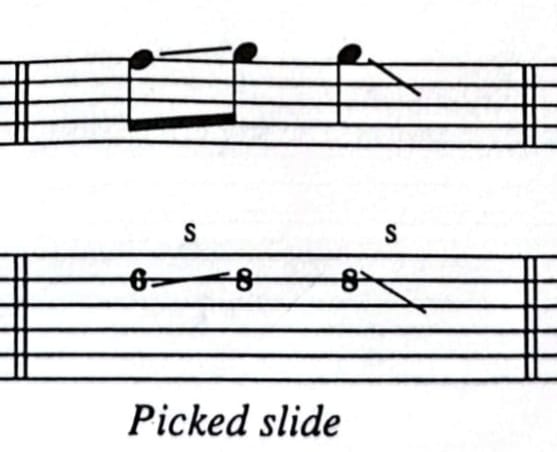
Picked Slide: Pick the starting note, slide to the target fret, and pick again.
Glissando Slide: Slide rapidly across multiple frets for dramatic effect.
Tips for Mastering Slides
Use the Right Pressure: Apply enough pressure to keep the note ringing but not so much that it creates friction.
Maintain Accuracy: Aim for the target fret; overshooting can sound sloppy.
Practice with Scales: Try sliding between notes in the pentatonic scale to build precision.
Start Slow: Gradually increase speed for clean slides.
How to Practice Slides
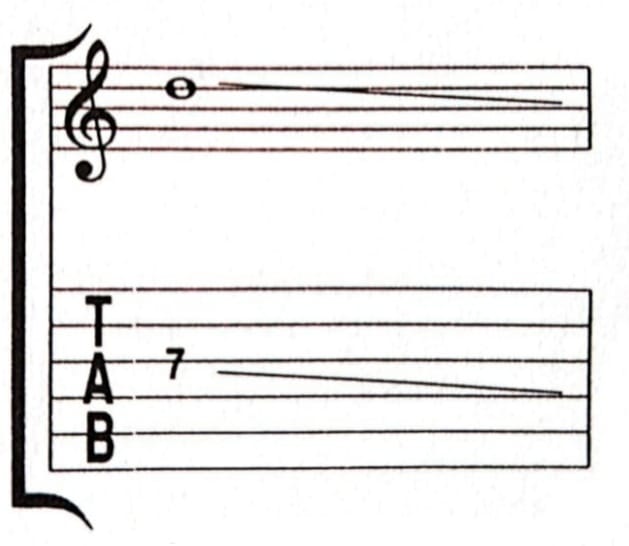
Play a note on the 5th fret of the 3rd string.
Slide up to the 7th fret and back down to the 5th.
Practice sliding between different frets and strings.
Where to Use Slides
Pop Songs: Add a slide to spice up basic chord progressions.
Improvisation: Use slides in solos for smooth transitions between licks.
Composition: Slides can add drama and flair to original music.
Summary
Sliding up and down on the guitar is a fundamental technique that allows you to move between notes smoothly and expressively.
It’s a versatile skill that enhances solos, riffs, and even rhythm parts. Whether you’re into rock, blues, metal, or pop, mastering slides will elevate your playing.
Pro Tip: Practice slides slowly and accurately to build muscle memory and control. With dedication, you’ll add a whole new level of fluidity to your music.
This website uses cookies to improve your experience. We'll assume you're ok with this, but you can opt-out if you wish. Read MoreACCEPT
Privacy & Cookies Policy
Privacy Overview
This website uses cookies to improve your experience while you navigate through the website. Out of these cookies, the cookies that are categorized as necessary are stored on your browser as they are essential for the working of basic functionalities of the website. We also use third-party cookies that help us analyze and understand how you use this website. These cookies will be stored in your browser only with your consent. You also have the option to opt-out of these cookies. But opting out of some of these cookies may have an effect on your browsing experience.
Necessary cookies are absolutely essential for the website to function properly. This category only includes cookies that ensures basic functionalities and security features of the website. These cookies do not store any personal information.
Any cookies that may not be particularly necessary for the website to function and is used specifically to collect user personal data via analytics, ads, other embedded contents are termed as non-necessary cookies. It is mandatory to procure user consent prior to running these cookies on your website.